• Skip to primary navigation
  • Skip to main content
  • Skip to primary sidebar
  • Skip to footer

Emergency   911   or Contact   (808) 529-3111  

  • Facebook
  • Instagram
  • YouTube
  • X icon
  • Tik Tok
Honolulu Police Department

Honolulu Police DepartmentKa 'Oihana Māka'i o Honolulu

Honolulu Police Department

Honolulu Police Department Ka 'Oihana Māka'i o Honolulu

  • Organization
  • Info & Resources
  • Media & Public Affairs
  • Community Programs
  • Careers
  • Police Services
  • About Us

Pedestrian and Bicycle Safety

  • Pedestrians
  • Bicycle Laws
  • Bicycle Safety
  • E-Bikes

“Jaywalking”


In 2024, there were 52 fatalities from motor vehicle collisions.19 were pedestrian related.

Some facts about Jaywalking:

  • Jaywalking is crossing a street outside of the crosswalk or away from the street corner
  • Jaywalking is against the law and punishable by fines in the State of Hawaii
  • Some people still believe that crossing using a marked crosswalk is inconvenient
  • Jaywalking is Dangerous and Deadly.

§291C-72 Pedestrians’ right-of-way in crosswalks.

No pedestrian shall suddenly leave a curb or other place of safety and walk or run into the path of a vehicle which is so close that it is impossible for the driver to yield.

Click here for the full description of the Hawaii law

§291C-73 Crossing at other than crosswalks.

Every pedestrian crossing a roadway at any point other than within a marked crosswalk or within an unmarked crosswalk at an intersection shall yield the right-of-way to all vehicles upon the roadway.

Click here for the full description of the Hawaii law

Penalty: Fines ranging from $130 to $180.


External Resources

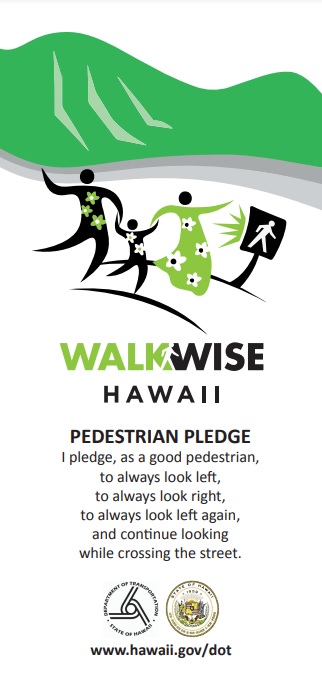
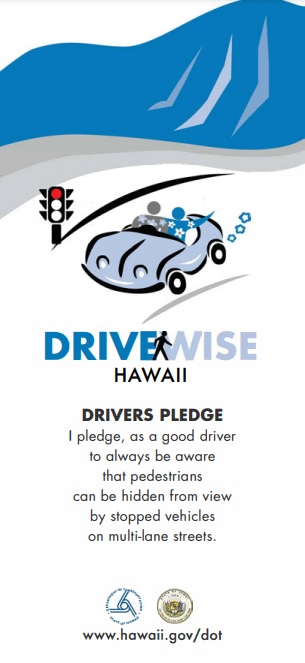
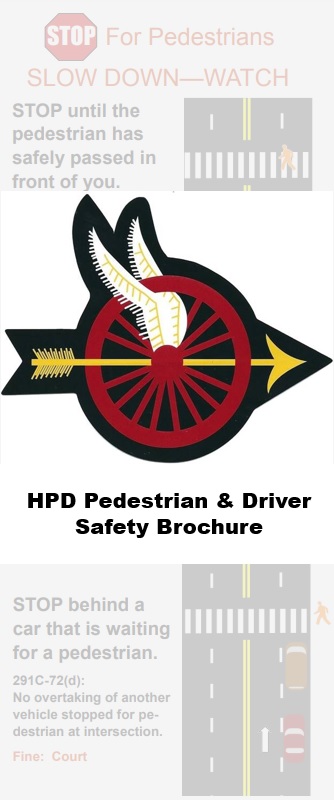
Click on the Brochures below for viewing or a downloadable PDF
https://www.nhtsa.gov/pedestrian-safety/how-pedestrians-can-walk-safely

https://www.nhtsa.gov/road-safety/pedestrian-safety

Bicycle Laws


Since July 10, 2012 the new Vulnerable Users Law is in effect. This law doubles penalties for motorists who kill or seriously injure vulnerable users (cyclists, pedestrians, police officers, road workers, etc.) acting legally. View the full Vulnerable Users law here.

§291C-142 Traffic Laws Apply to Bicyclists.

Bicyclists using a roadway have all the rights and duties applicable to the driver of a motor vehicle, except as stated by special bicycle regulations and except for those provisions which by their nature cannot be applied to bicyclists.

Click here for the full description of the Hawaii law

§291C-144 Clinging to Vehicles.

When riding a bicycle, do not attach it or yourself to another vehicle.

Click here for the full description of the Hawaii law

§291C-145 Riding on Roadways and Bikeways.

When traveling slower than the normal speed of traffic, bicyclists are to ride as close to the right hand curb or on the shoulder of the roadway, as practical.

Click here for the full description of the Hawaii law

§291C-147 Lights and Other Equipment on Bicycles.

Any bicycle used from thirty (30) minutes after sunset until thirty (30) minutes before sunrise must have a head light, facing forward. Bicycles must be equipped with brakes capable of bringing the bicycle to a complete stop within 25 feet from a speed of 10 mph on dry, level, clean pavement.

Click here for the full description of the Hawaii law

§291C-150 Bicycle Helmets.

No person under sixteen (16) years of age shall operate a bicycle on a street, bikeway, or any other public property unless that person is wearing a properly fitted and fastened bicycle helmet.

Click here for the full description of the Hawaii law


External Resources

https://hbl.org/resources/hawaii-bike-laws/

Bicycle Safety


Download O’ahu Bike Guide
  • Wear clothes that make you more visible.
  • Be cautious when riding a bike at night. Make sure you have the proper lights on your bicycle. Wear reflective materials or clothing.
  • Wear a helmet. Studies have shown that wearing a helmet can reduce injuries by up to 80%.
  • Loose items should be secured to a properly installed carrier or carried in a backpack.
  • Protect against bike theft. Most bikes stolen are not locked.
  • Obey traffic signs, signals and road markings.
  • Be familiar with the laws pertaining to bicycles.

External Resources

https://www.nhtsa.gov/road-safety/bicycle-safety

https://www.nhtsa.gov/sites/nhtsa.gov/files/811557.pdf

https://www.pedbikeinfo.org/

The Honolulu Police Department reminds the community to ride e-bikes and other electric mobility devices safely, responsibly and legally. The rise in popularity of these devices, including e-bikes and high-speed electric devices, has brought new challenges to traffic safety in our community. While these devices offer convenience and sustainability, they also come with risks, especially when operated by individuals who are improperly licensed, untrained, or riding in a reckless manner.

Our traffic enforcement unit has observed an increase in unsafe riding behaviors, including excessive speeds, disregard for traffic laws, and the operation of out-of-class high-powered/ high-speed electric devices that do not meet safety regulations. These actions have directly contributed to a rise in collisions, serious injuries, and near-miss incidents with pedestrians and other road users.

The biggest misconception is classifying high speed electric devices as e-bikes. E-bikes, or low speed electric bicycles are actual bicycles with both pedals and electric motors. In the e-bike presentation below, we define the three classes of e-bikes and how you can differentiate between the devices. 

We also address the high-speed electric devices that are essentially electric versions of motorcycles and dirt bikes. Parents and guardians are advised that these vehicles can reach speeds in excess of 45 mph and are subject to the same regulations as motorcycles, including motor vehicle insurance, type 2 driver’s license, registration, and safety check.

Ambiguity regarding where these devices can be operated has led to inconsistent usage as well as an increase in collisions and near-misses between riders, pedestrians, and motor vehicles.  We have included where e-bikes can be ridden in the presentation, along with other requirements and current laws.

A new law for the City and County of Honolulu requires that anyone under the age of 18, riding an e-bike must wear a helmet.  It’s the law, but more importantly we know wearing a helmet can save lives. Don’t let your keiki get seriously injured or worse by riding anything (skateboard, bicycle, e-bike, foot scooter etc…) without wearing a helmet.  Take time to teach them about traffic safety, and the importance of following the applicable traffic laws.

The Honolulu Police Department is avidly working with other government entities and fellow traffic safety partners, for viable solutions moving forward. We are confident that the current state laws will be revised during the current legislative session to help address these devices and safety for all users.

To recap, always follow traffic laws, wear proper safety gear, and be mindful of pedestrians and other road users. Remember, riding on sidewalks is prohibited in many areas, and reckless operation can result in citations, fines or worse… collisions. Let’s work together to keep our streets safe for everyone. Mahalo for your cooperation!


E-Bikes: Bridging the Gap Presentation (Click on the image below):

Hawaii Bicycling League e-bike video series (Click on the image below):
Primary Sidebar

  • Info & Resources
    • Annual Report
    • Arrest Logs
    • Cold Cases
    • Covered Offender Registry (Sex Offender)
    • Current Calls for Police Service
    • Cyber Crimes
    • Did You Know
    • Disciplinary Report
    • Domestic Violence/TRO
    • Firearms
    • Highlights
    • HPD Alerts page
    • HPD Data Dashboard
    • Identity Theft
    • Informational Brochures
    • LGBTQ+ Liaison
    • Motor Vehicle Safety
    • News
    • News Releases and Press Conferences
    • Pathways Internship Program
      • Structure
      • Application Process
      • FAQ
      • Brochure
    • Pedestrian and Bicycle Safety
    • Policies
    • Strategic Plan
    • Stolen Bicycle Database
    • Traffic Information Page
    • Visitor Information
    • Wanted Persons
    • FAQ
  • Facebook
  • Instagram
  • YouTube
  • X icon
  • Tik Tok

Footer

The Honolulu Police Department (Official Site)

An Equal Opportunity Employer
Honolulu Police Department 801 South Beretania Street Honolulu, HI 96813
City and County of Honolulu
Emergency 911 or Contact (808)529-3111
Disclaimer

Contact Us

Sitemap

  • Organization
  • Info & Resources
  • Media & Public Affairs
  • Community Programs
  • Careers
  • Police Services
  • About Us

Additional Links

  • Employment Opportunities
  • Youth Programs
  • Honolulu Police Commission
  • Real Time Traffic Updates
  • City & County of Honolulu
  • COVID-19 Information
  • Facebook
  • Instagram
  • YouTube
  • X icon
  • Tik Tok

Copyright © 2026 The Honolulu Police Department. All rights reserved. 
Return to top

Vietnamese

• Chỉ băng qua đường ở góc phố hoặc lối bộ hành. Đi bên tay mắt của lối bộ hành khi qua đường.

• Khi qua đường ở ngã tư có đèn hiệu, nhớ bấm nút đèn hiệu dành cho người đi bộ và chờ đến khi đèn này bật sáng.

• Hãy nhìn phải nhìn trái trước khi qua đường; tiếp tục nhìn trong khi qua đường. Đừng bao giờ chạy, cứ đi bình thường.

• Hãy đi trên lề đường; nếu không có lề đường, hãy đi bên phía trái của đường, đối diện dòng xe.

• Mặc quần áo mầu tươi sáng hoặc mầu lạt khi đi bộ hoặc chạy bộ. Ban đêm nên mang băng phản chiếu ánh sáng.

• Coi chừng các xe đang de (lùi) từ trong ngõ ra vì người lái xe thường không nhìn thấy bạn.

• Lúc chờ xe buýt hãy đứng trên lề đường và đứng cách xa nơi xe buýt ngừng tối thiểu 10 feet (3m30).

Samoan

• Seʻi vaganā o le tulimanu o le ala po ua i ai laina e savavali ai ma kolosi i le isi itūala, ona faʻatoʻa tatau lea ona kolosi le ala. Afai o le a e kolosiina le ala, ia tautuanā e tumau i lou itū taumatau.

• Afai o le a e kolosiina le ala i se magāala o i ai molī e tatau lava ona e oʻomi le faʻamau e ola ai le molī kolosi, ma ia e faʻatali seʻi vaganā ua ola mai le faʻailoga e te savali ai.

• Ia tautuanā e tagaʻi i le agavale taumatau agavale ona e faʻatoʻa kolosi lea ma mataʻala i taimi uma e kolosi ai le ala. Ia mānatuʻa e savali agaʻi i le isi itūala, a e ʻaua le momoʻe.

• Ia e faʻamasani i ala faʻapitoa i autafa o le alatele pe afai e i ai, afai e leai, ia e savali i le itū agavale o le auala e faʻafeagai ma taʻavale e agaʻi mai.

• Ia laei lavalava e malolosi lanu pe lanu vaivai foʻi pe afai e te alu e savali pe momoʻe[koleni]. Ia laei i lavalava e feilafi pe a taia i le molī i le po.

• Ia mataʻala i taʻavale e solomuli mai i lumāfale, o le tele o taimi e le iloa mai oe e le avetaʻavale.

• Ia faʻatali lelei le pasi i autafa o le auala. E tatau ona sefulu futu le mamao e te tu ai mai le mea e taofi ai le pasi.

Korean

• 길을 건너실 때는 반드시 횡단보도를 이용 하시거나 길 모퉁이에서 건너 가십시오. 횡단보도 에서는 우측 통행을 하십시오

• 교통신호등이 있는 곳에서는 잊지 마시고 보행자 횡단신호 단추를 누르시고 횡단신호가 나온 다음 길을 건너 가십시오

• 길을 건너기 전과 건너는 동안 좌측-우측-좌측의 순으로 통행 차량을 살피십시오. 절대로 뛰지 말고 언제나 걸어서 길을 건너 가십시오.

• 길을 걸을 때는 보도를 이용 하시고 보도가 없는 곳에서는 통행 차량을 향하여 길 좌측 끝을 걷도록 하십시오.

• 산책이나 “죠깅”을 하실 때에는 밝고 환한 색의 옷을 입으시고 야간에는 광선반사틀 하는것을 착용 하십시오.

• “드라이브 웨이”에서 후진해 나오는 차를 조심 하십시오. 운전하고 있는 사람이 당신을 보지 못할 수 도 있읍니다

• 버스를 기다리실 때에는 길가 한쪽에서 기다리 시되 언제나 버스가 정차하는 곳으로 부터 최소 10 피-트 떨어진 곳 에서 기다리 십시오.

Japanese

• 道路を横断する時は、交差点で渡るか 又は、横断舗道を利用し、横断中は横 断舗道の、右寄りを歩きます。

• 信号機のある交差点を渡る時は、必ず 歩行者用信号ボタンを押し、進め”の 指示信号になるまで待ちます。

• 横断する前、及び横断中は、必ず左、右、左、と確認し、ずっと注意を払い ます。決して走らず、歩いて渡ります。

• 舗道があれば、舗道を歩きますが、無 ければ道路の左側を、車の往来に向か って歩きます。

• 散歩やジョギングをする時は、できれ ば明るい色や、薄い色の服装にし、夜 間は光を反射する素材の物を着用しま
す。

• バックしながら車道に出て来る車に は、ドライバ・・からあなたが見えにく いので特に、注意します。

• バスを待っている時は、道路のそばに 立ち、常にバスの停留地点から、最低 10フィート(3メートル)は離れて待ちま
す。

Filipino

• Bumallasiwka laeng iti nagsulianan wenno iti naituding a ballasiw a dalan. No bumallasiwka agianka iti kanawan ti pagballasiwan a dalan.

• No bumallasiwka iti nasilawan a nagkurusan ti dalan masapul nga usarem ti butones ti pagsinialan a para kadagiti magmagna ket urayem ti panagsukat ti pagkitaan iti ibaballasiw.

• Masapul a kitaem iti kanigid-kanawankanigid sacbay a bumallasiwka ket itultuloy ti panangkita iti dalan kabayatan ti ibaballasiwmo. Magnaka laeng no bumallasiwka iti kalsada, iti kaanoman saanka nga agtartaray.

• Magnaka iti igid ti kalsada; ngem no awan ti naituding a pagnaan ti igid, magnaka iti kanigid a bangir iti kalsada ket sangoern ti
pagsungadan dagiti umay a lugan.

• Agusarka iti naraniag wenno nasilnag ti kolorna a kawes no magmagna wenno mangwatwatka (jogging). Agusarka iti lupot a makita ti marisna (retro-flective material) iti rabii.

• Siputam dagiti luglugan a rumuar kadagiti pagdalanan nga aggapu iti garahe, ta masansan a ti agmaneno saannaka a makita.

• Agianka iti igid ti kalsada kabayatan panaguraymo iti lugan. Agurayka iti sangapulo a kadapan manipud iti pagsardengan ti bus.

Chinese

• 只在街角或行人穿越道上過馬路,過馬 路時要靠右邊行走

• 通過有信號燈的十字路口時,請務必使 用行人信號按鈕,並且等候通行燈亮 起。

• 通過馬路前一定要看左,看右,再看 左,並且一面通行一面注意。要步行穿 過馬路,切勿奔跑 。

• 如果有人行道,請走人行道。若無人行 道,請走大路左側,面對來車。

• 外出行走或慢跑,請穿鮮豔或淺色的衣 服。夜晚,則穿會反射光線的衣服。

• 注意正在駛出車道的後退車輛,駕駛人 不一定看得見你。

• 等候公共汽車,請站在路邊。要離公共 汽車將停處至少十呎遠。

English

• Cross the street only at the corner or at a crosswalk. While crossing, keep to the right of the crosswalk.

• When crossing at a lighted intersection, be sure to use the pedestrian signal button and wait for the walk indicator.

• Be sure to look left-right-left before crossing and continue to look while crossing. Always walk across the street, never run.

• Walk on the sidewalk if there is one; if there is no sidewalk, walk on the left side of the roadway facing traffic.

• Wear bright or light-colored clothing when out walking or jogging. Wear retro-reflective materials at night.

• Watch for cars backing out of driveways. Drivers don’t always see you.

• Stand on the side of the road while you wait for the bus. Always stand at least 10 feet away from where the bus will stop.