POLICE CHIEFS OF THE
HONOLULU POLICE DEPARTMENT
1932 To Present
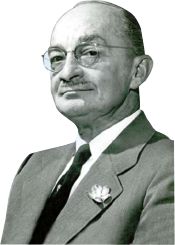
Charles F. Weeber
January 27, 1932 to August 9, 1932
Charles F. Weeber, was a man with impeccable reputation in the business and social communities of Honolulu. With a military background, he was the Police Commission’s unanimous choice for Police Chief. He was appointed to the position on January 27, 1932, and was given full authority to act in reorganizing the department, subject to the approval of the commission. Chief Weeber immediately named as his Assistant Chief, William Hoopai, a veteran law enforcement officer with a good reputation and background, including high rank in the National Guard.
Chief Weeber resigned as Chief of Police on August 12, 1932, after serving seven months. He returned to his career in the business world.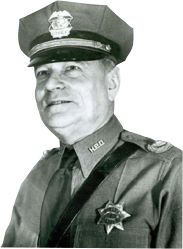
Chief William A. Gabrielson
August 9, 1932 to June 1, 1946
William A. Gabrielson was the second chief of the Honolulu Police Department. GABRIELSON had been brought to Honolulu as an instructor from his position as a lieutenant in the Berkeley, California Police Department.
Chief Gabrielson continued the program of modernizing the department in the same manner originally initiated by Chief Weeber. While some reassignment of duties and responsibilities had been made under Chief Weeber, Gabrielson made additional moves, all designed to strengthen the department and improve services to the public.
Chief Gabrielson imposed the same stern disciplinary measures on his subordinates as the Police Commission and the public imposed on him as chief.
On January 1, 1934, Chief Gabrielson announced that the “eagle” badge was being retired in favor of the 7-point star badge, which he said added to the general appearances of uniformed officers.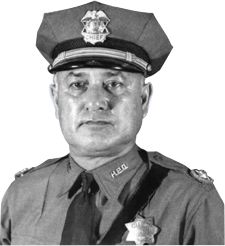
Chief William Hoopai
(First HPD Chief of Hawaiian Ancestry)
June 1, 1946 to October 1, 1948
William Hoopai, assistant Chief of Police under Chiefs Weeber and Gabrielson, was named by the Police Commission as acting Chief of Police on April 12, 1946. On June 1, 1946 he was officially named Chief of Police. The position of Assistant Chief was temporarily left vacant.
The immediate problem confronting Chief Hoopai was that of convincing the public that efficient and effective police services had not been affected by the graft scandal.
Hoopai was a “local boy”, the first to take on the position of Chief of Police. He was aware of the responsibility he carried, not only to the public, but to his colleagues in the service.
In 1946, Chief Hoopai created an elite unit to combat gang violence. This 12-man team, lead by Sergeant Neil A. Donohue, had been given unusual freedom in its operation by Chief Hoopai. This team, called the Metro Squad, eventually expanded and became the Tactical Operations Division. Today the division is known as HPD’s Specialized Services Division.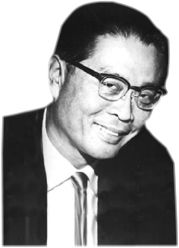
Chief Dan Liu
(HPD’s Longest Serving Chief)
October 1, 1948 to June 30, 1969
Dan Liu began his career in the Honolulu Police Department as a clerk and worked his way up to the rank of Captain before being appointed to the Chief Of Police position October 1, 1948.
Liu initiated strong enforcement programs against vice criminals and lobbied for better working conditions for officers.
He established crime prevention programs such as the Police Activities League.
Liu retired in 1969, after serving 20 years as chief.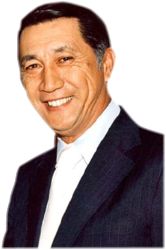
Chief Francis Keala
December 24, 1969 to April 1, 1983
Francis Keala was promoted from captain of the finance division to chief of police in 1969. He was faced with an increasing disrespect for law and order; an expanding drug abuse problem in the public and in his department. The “Operation Hukilau” and the green harvest operations were a credit to his success in infiltrating covert operations.
Chief Keala was the first person with a college education to become chief of the Honolulu Police Department. He saw that there were many problems confronting police, due to the changing concept of the role of the police in society at that time. Where once police had been an “enforcer”, now it was necessary for officers to be aware of the deeper sociological problems involved in dealing with people.
To Chief Keala it was evident that police officers needed a broader understanding of their role in the social structure of the 1970’s, and that the training and retraining of all officers was necessary to meet this end. Chief Keala retired in 1983.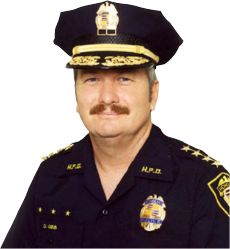
Chief Douglas Gibb
June 20, 1983 to December 21, 1989
Douglas Gibb was appointed Chief of Police on June 20, 1983. He served until 1989. Chief Gibb was the third youngest chief in the history of the department.
During his administration, the department turned to a global perspective as national and international types of crime became commonplace. The Honolulu Police Department’s high tech advances in computerization and in police equipment and techniques improved crime detection and police procedures.
In 1984, Chief Gibb announced that the Honolulu Police department would start a drug abuse prevention program with fifth grade students in Oahu elementary schools. The program won praise from teachers and parents.
Chief Gibb also succeeded in getting some police functions decentralized, opening new substations in Kahuku, Waikiki, and downtown Honolulu.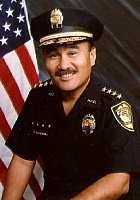
Chief Michael S. Nakamura
August 1, 1990 to December 30, 1997
Michael Nakamura was sworn in as Chief Of Police August 1, 1990. Chief Nakamura’s efforts to bring the department closer to the community we serve led to the decentralization and expansion of the role of police officers. By promoting the philosophy of community policing and programs such as the Citizens Police Academy, he sought to bridge the traditional gap between law enforcement and the public.
His goal to be more responsive to the public and at the same time shouldering the increasing demands of service led to support of such programs such as ” No Hope in Dope”.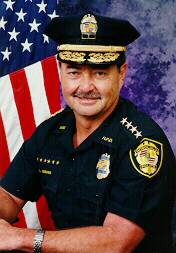
Chief Lee D. Donohue
April 13, 1998 to July 1, 2004
Lee D. Donohue was a 33-year veteran of the police department when he was appointed Chief of Police. His career to this point included extensive experience in patrol and field operations.
Chief Donohue then led the department into the 21st century. He implemented positive changes to the department through his strategic planning program (HPD 2003), a five- year, department wide, coordinated process to improve services and efficiency, and to hire and retain satisfied employees.
Chief Donohue focused much of his efforts on improving the safety of his officers. He initiated safety programs and provided officers with state-of-the-art police equipment including bullet resistant vests for all officers, improved flashlights for night time duty, improved police radios and computer equipment, and less lethal weapons for use in tactical situations involving resisting criminal suspects.
A lasting achievement of his term was the successful accreditation of the police department by the Commission on Accreditation for Law Enforcement Agencies, becoming the 14th major police department in the U.S. to earn this distinction.
As a seventh-degree black belt Karate instructor, Chief Donohue co-founded Kick Start Karate, a Police Activities League program designed to encourage at-risk intermediate school students to pursue higher education.
In 2004, on the anniversary of his 40th year as a police officer, Chief Donohue retired.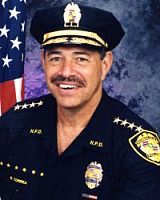
Chief Boisse P. Correa
August 27, 2004 to August 27, 2009
Boisse P. Correa was sworn in on August 27, 2004, as the Honolulu Police Department’s ninth chief of police. He joined the HPD in 1970, working in nearly every element in the department as he rose through the ranks. Under his leadership, crime in Honolulu dropped to its lowest level in 30 years, public complaints to the Honolulu Police Commission were the lowest ever recorded, and all officer positions were staffed for the first time since the 1970s. Also during this time, the HPD became the first major city police department to receive the prestigious TRI-ARC Excellence Award from the Commission on Accreditation for Law Enforcement Agencies.
During his 40 years of public service, Correa spearheaded several key initiatives, including the mandatory arrest of domestic violence suspects, banning of assault weapons, defibrillator training for police officers, and creation of the state terrorist warning protocol. He also established the Homeland Security Division for terrorism and large-scale emergencies.
Chief Correa retired on August 26, 2009 after four decades of service.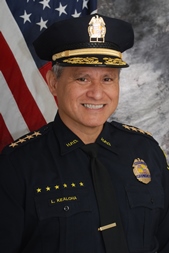
Chief Louis M. Kealoha
November 25, 2009 to February 28, 2017
The Honolulu Police Department’s (HPD) tenth Chief of Police, Louis M. Kealoha was sworn in on November 25, 2009. Chief Kealoha and his administration were committed to making the City and County of Honolulu the safest city in the nation in which to live, work, and play. He envisioned a police department focused on organizational effectiveness and efficiency, employee relations, community relations, and public service. His leadership philosophy, known as MAP, centered on the Hawaiian principles of mahalo, aloha, and pono. An example of this philosophy is Project CLEAN (Community Lokahi to Enrich our Aina Now), which brought law enforcement and community organizations together to improve the community through neighborhood clean-ups.
Chief Kealoha joined the HPD in 1983. During his career he rose through the ranks working in patrol for 13 years before being assigned to various elements including the Training Division, Narcotics/Vice Division, Office of Accreditation, the Criminal Investigation Division, and the Juvenile Services Division (now Community Affairs Division).
Born and raised in Honolulu, Chief Kealoha graduated from Damien Memorial High School in 1978. He holds bachelors degrees in criminal justice and business administration from Wayland Baptist University, a masters of science degree in criminal justice administration from Chaminade University, and a doctoral degree in education from the University of Southern California. Chief Kealoha is a graduate of the Federal Bureau of Investigation’s National Academy in Quantico, Virginia.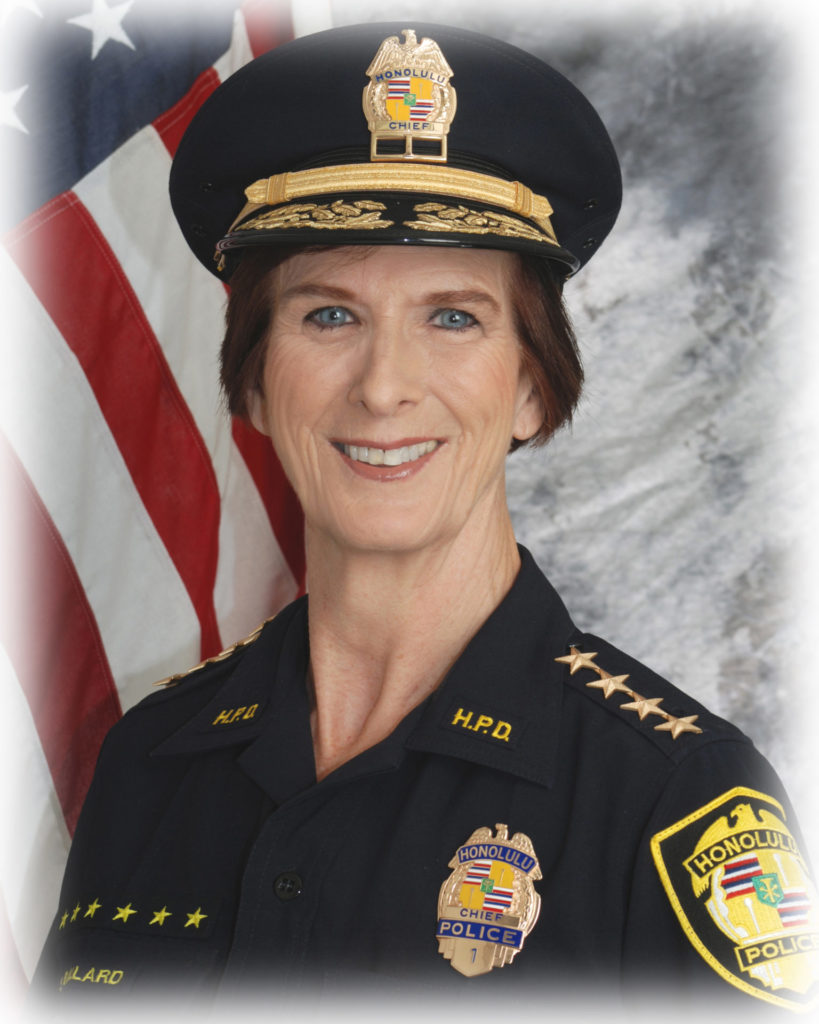
Chief Susan Ballard
November 1, 2017 to May 31, 2021
Chief Susan Ballard became the Honolulu Police Department’s 11th chief and Hawaii’s first female chief of police on November 1, 2017. She joined the HPD in 1985 and worked in a wide range of field and administrative assignments, including the Narcotics/Vice and the Downtown-Chinatown patrol district. As a commander, she has led the Kaneohe and Kalihi patrol districts and the Finance, Training, and Central Receiving divisions.
Chief Ballard believes in the department’s mission statement of Serving and Protecting with Aloha. She envisions the community and HPD working together to make Oahu safe for its nearly one million residents and five times as many visitors. Her priorities include rebuilding public trust, preventing and solving crime, and recruiting and retaining quality employees. She is also committed to expanding police programs for the young and elderly.
Born in Virginia and raised in North Carolina, Chief Ballard has a Master of Arts degree in health and physical education from Tennessee Technological University and a Bachelor of Science degree in health and physical education from Appalachian State University.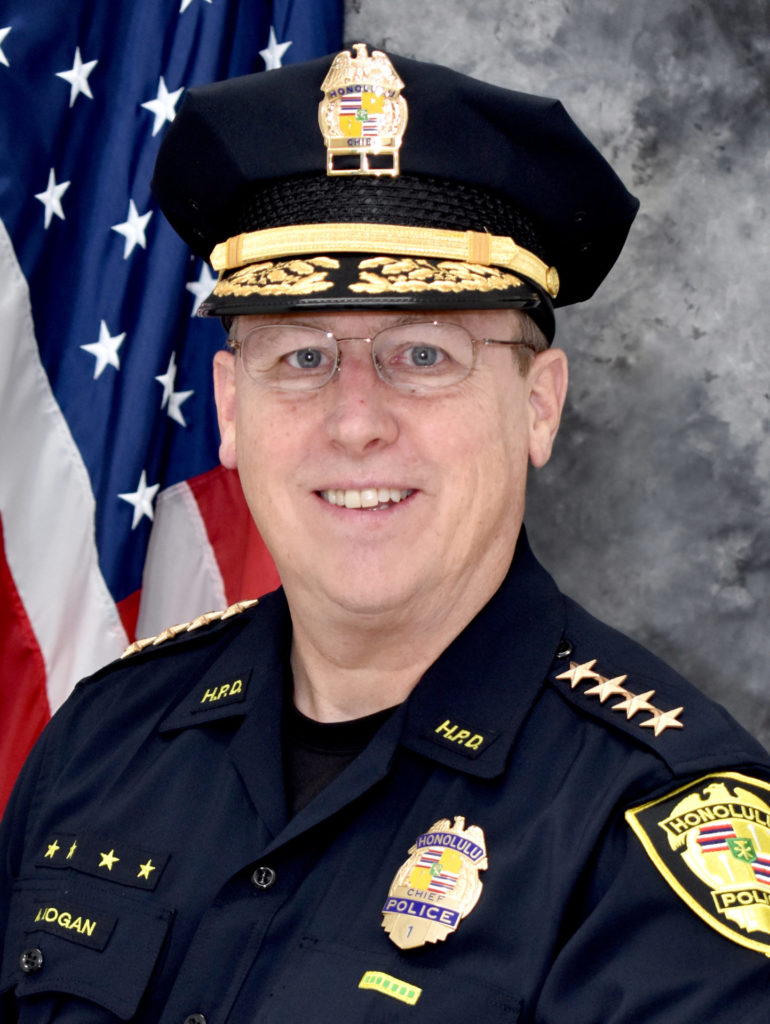
Chief Arthur “Joe” Logan
June 14, 2022 to July 31, 2025
Arthur “Joe” Logan was born in Omaha, Nebraska, and moved to Hawaii with his family in 1972. He joined the Honolulu Police Department in 1982 and worked in District 4 (Windward Oahu) Patrol and the Narcotics/Vice and Traffic Divisions. He was assigned to the Criminal Investigation Division as a detective before leaving the HPD in 2002 to accept a full-time assignment with the Hawaii Army National Guard. He rose through the ranks and attained the rank of Major General before retiring as the Adjutant General for Hawaii in 2020. He was sworn in as the Honolulu Police Department’s 12th chief of police on June 14, 2022.
Chief Logan has a master’s degree in strategic studies from the U.S. Army War College and a bachelor’s degree in Justice Administration and Management from Hawaii Pacific University. He graduated from St. Louis School in Kaimuki.