• Skip to primary navigation
  • Skip to main content
  • Skip to footer

Emergency   911   or Contact   (808) 529-3111  

  • Facebook
  • Instagram
  • YouTube
  • X icon
  • Tik Tok
Honolulu Police Department

Honolulu Police DepartmentKa 'Oihana Māka'i o Honolulu

Honolulu Police Department

Honolulu Police Department Ka 'Oihana Māka'i o Honolulu

  • Organization
  • Info & Resources
  • Media & Public Affairs
  • Community Programs
  • Careers
  • Police Services
  • About Us

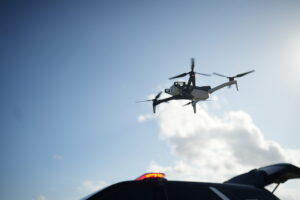
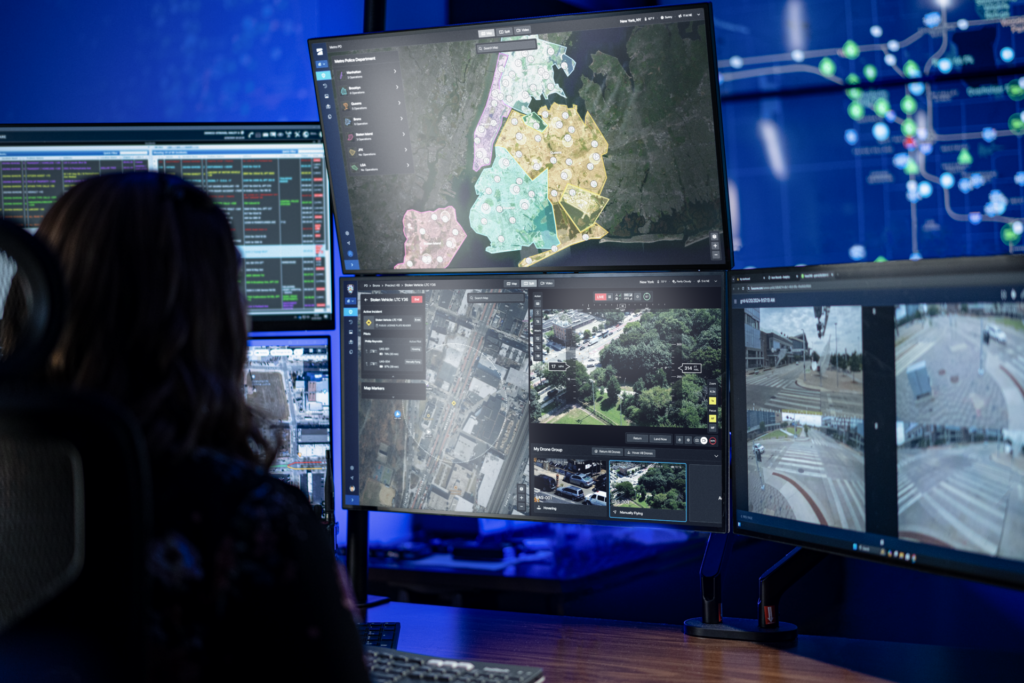
The Honolulu Police Department’s Drone as First Responder (DFR) pilot program uses unmanned aircraft systems (drones) to respond to certain emergency calls before officers arrive on scene. By providing responding officers with real-time aerial information, drones help improve situational awareness, support informed decision-making, and strengthen public safety.

Why Drone as First Responder?
Faster Response

In an emergency, every second counts. DFR drones can arrive at calls significantly faster than officers responding by vehicle, providing an immediate assessment of the situation while officers are still en route. By getting eyes on the scene first, HPD can deliver assistance to the community more quickly and improve the chances of locating and apprehending suspects.

Real-Time Intelligence

By being first on scene, DFR drones give responding officers real-time intelligence before they arrive. Officers can identify potential hazards, assess the number of people involved, monitor changing conditions, and gain a clearer understanding of what is happening—all before stepping out of their patrol vehicle.

Better Decisions

Good decisions begin with good information. By giving officers a clearer understanding of the situation before they arrive, DFR helps reduce uncertainty and supports more measured, informed decision-making. That means officers can choose the most appropriate response from the outset, leading to safer, more effective outcomes for both the public and responding personnel.

Smarter Resource Use

Better decisions also lead to smarter use of public safety resources. Officers and supervisors can determine the appropriate personnel and resources needed for an incident before they arrive. In some cases, a drone may quickly determine that a reported incident has already resolved itself or no longer requires an in-person police response, allowing officers to remain available for higher-priority emergencies while ensuring calls are still assessed promptly.

About HPD’s Drone as First Responder Pilot Program

The Honolulu Police Department’s Drone as First Responder (DFR) pilot program uses drones to respond to certain 911 calls ahead of officers on the ground, providing real-time aerial information that helps strengthen emergency response and improve public safety. By arriving at an incident quickly, a DFR drone can provide responding officers with valuable intelligence before they arrive on scene, allowing them to better assess the situation, determine the appropriate response, and make more informed decisions.

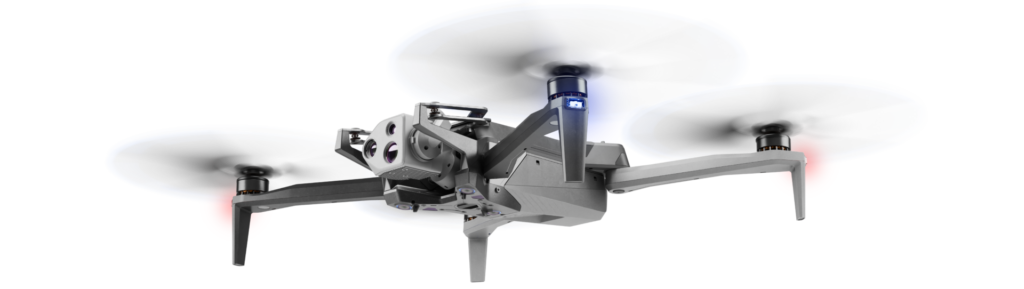
HPD’s DFR Program is operated in partnership with the Hawaiʻi State Department of Law Enforcement (DLE). During the pilot phase, FAA-certified HPD pilots will operate Skydio X10 and Skydio R10 drones provided by DLE. Operations will be based out of HPD’s Alapaʻi Headquarters and initially serve Districts 1 and 5, with plans to expand to island-wide operations in the future.

The program is entirely call-for-service based, meaning drones are deployed only in response to designated 911 calls or requests for assistance from HPD personnel. Drones are not used for routine patrols or general surveillance.

As the program grows, HPD remains committed to transparency, accountability, and responsible use of drone technology.
No Caption
No Caption
No Caption

Images courtesy of Skydio

Frequently Asked Questions

Have questions about HPD’s Drone as First Responder program? Browse answers to common questions below about how DFR works, when drones are deployed, privacy protections, and how the program supports public safety while maintaining transparency and accountability.

What is a drone?

A drone, also known as an Unmanned Aircraft System (UAS), is a small aircraft that is operated without a person onboard. While many people use the term “drone” to refer only to the aircraft itself, a UAS includes the entire system needed to safely operate it, including the aircraft, the remote controller, communication links, and supporting software. Public safety agencies across the country use UAS technology to enhance situational awareness, improve response times, and support emergency operations. At HPD, drones serve as a tool to provide officers with real-time aerial information, helping them make more informed decisions while enhancing the safety of both the public and responding personnel.

Why is HPD launching a Drone as First Responder (DFR) program?

The program is designed to improve emergency response and public safety. DFR drones can often arrive at certain emergency calls faster than officers responding by vehicle, allowing HPD to begin assessing the situation sooner and helping officers make better-informed decisions before they arrive, ultimately improving service to the public.

Will drones replace police officers?

No. Drones are an additional public safety tool and do not replace officers. They provide valuable information before officers arrive but do not replace the judgment, training, or responsibilities of sworn police officers.

Will drones patrol neighborhoods or monitor the public regularly?

No. Drones are deployed only in response to 911 calls from the public, or calls for assistance from other HPD personnel. Drones will not be used for random surveillance, intelligence gathering, or monitoring without a defined mission.

When will a drone be deployed?

DFR drones are deployed only in response to 911 calls from the public or calls for assistance from other HPD personnel. Potential incidents include:

– Crimes in progress or high-priority calls requiring immediate situational awareness;
– Search and rescue operations;
– Hazardous material incidents or disaster-related assessments;
– Major traffic collisions or roadway hazard evaluation;
– Crowd management or large-scale public events;
– High risk tactical operations (active threat, barricaded subjects, hostage situations);
– Any mission authorized by the Chief of Police or designee.

What areas will the DFR program cover?

The pilot phase of the program will operate from HPD’s Alapaʻi Headquarters and serve District 1—Downtown, Chinatown, Nuʻuanu, Makiki, Ala Moana, and Kakaʻako—and District 5—Kalihi, ʻIwilei, Kapālama, ʻAlewa, Moanalua, and Salt Lake. HPD will evaluate operational results, community feedback and public safety needs before determining whether and how the DFR program may be expanded islandwide.

What training do HPD drone pilots undergo?

All HPD drone pilots hold a valid Federal Aviation Administration (FAA) Part 107 Remote Pilot Certificate, which is required to operate small unmanned aircraft for public safety missions. In addition to meeting federal licensing requirements, HPD pilots receive department-specific training on drone operations, safety procedures, applicable laws and regulations, emergency response protocols, and privacy considerations. Pilots are trained to operate within FAA regulations and established industry best practices.

What types of drones will be used?

FAA-certified HPD pilots will operate Skydio X10 and Skydio R10 drones provided by the Hawai‘i State Department of Law Enforcement.

How will HPD’s DFR program protect my privacy?

Protecting privacy is a core principle of HPD’s Drone as First Responder program. HPD policy prohibits drone operators from intentionally recording or transmitting images of private activity, conditions, or locations, where a reasonable expectation of privacy exists, except when such recording or transmission of images is either (1) incidental to achieving a legitimate law enforcement objective or other legitimate public purpose, (2) authorized by a valid warrant, and/or (3) when otherwise permitted by law.

In addition to this, privacy is protected on several levels:

Constitutional Safeguards: All DFR deployments comply with the Hawaiʻi State Constitution Article I, Section 6 – Right to Privacy; and Article I, Section 7 – Searches, Seizures, and the Right to Privacy.

Targeted Surveillance Prohibition: DFR is not used to monitor or track individuals without a clearly defined mission tied to a call-for-service.

Flight Procedures that Prioritize Privacy: During transit to an incident, drone cameras are kept horizontally towards the horizon or skyward, preventing accidental recording of uninvolved locations and individuals. Video recording only activates when the aircraft arrives within the immediate vicinity of the incident.

For more information about how HPD’s DFR program prioritizes privacy and transparency, please reference HPD’s official DFR policy.

How is the video captured by drones stored and kept secure?

Drone video, images, flight logs, metadata, and related records are treated as official department records. As such, data that is retained is stored in a secure cloud system that satisfies the cybersecurity requirements set forth in the City and County of Honolulu’s and HPD’s Data Management Policy. Access to DFR recordings is strictly limited to personnel with operational or investigative need, with audit logs documenting access. Evidentiary footage is retained and kept secure in the same manner as all other police evidence. Non-evidentiary footage is deleted within 30 days.

HPD’s DFR Policy

Transparency and accountability is a cornerstone of HPD’s DFR program. Review the department’s policy outlining how drones are deployed, the safeguards in place to protect privacy and civil liberties, and the standards that govern every operation.

Read More

DFR Press Release

Read the official announcement introducing HPD’s Drone as First Responder program. The press release provides an overview of the pilot program, its objectives, and how the technology will help improve public safety across Honolulu.

Read More

Community Feedback

Have a question, complaint or feedback? We’d love to hear from you. Reach out to our DFR feedback email at [email protected]

Footer

The Honolulu Police Department (Official Site)

An Equal Opportunity Employer
Honolulu Police Department 801 South Beretania Street Honolulu, HI 96813
City and County of Honolulu
Emergency 911 or Contact (808)529-3111
Disclaimer

Contact Us

Sitemap

  • Organization
  • Info & Resources
  • Media & Public Affairs
  • Community Programs
  • Careers
  • Police Services
  • About Us

Additional Links

  • Employment Opportunities
  • Youth Programs
  • Honolulu Police Commission
  • Real Time Traffic Updates
  • City & County of Honolulu
  • COVID-19 Information
  • Facebook
  • Instagram
  • YouTube
  • X icon
  • Tik Tok

Copyright © 2026 The Honolulu Police Department. All rights reserved. 
Return to top

Vietnamese

• Chỉ băng qua đường ở góc phố hoặc lối bộ hành. Đi bên tay mắt của lối bộ hành khi qua đường.

• Khi qua đường ở ngã tư có đèn hiệu, nhớ bấm nút đèn hiệu dành cho người đi bộ và chờ đến khi đèn này bật sáng.

• Hãy nhìn phải nhìn trái trước khi qua đường; tiếp tục nhìn trong khi qua đường. Đừng bao giờ chạy, cứ đi bình thường.

• Hãy đi trên lề đường; nếu không có lề đường, hãy đi bên phía trái của đường, đối diện dòng xe.

• Mặc quần áo mầu tươi sáng hoặc mầu lạt khi đi bộ hoặc chạy bộ. Ban đêm nên mang băng phản chiếu ánh sáng.

• Coi chừng các xe đang de (lùi) từ trong ngõ ra vì người lái xe thường không nhìn thấy bạn.

• Lúc chờ xe buýt hãy đứng trên lề đường và đứng cách xa nơi xe buýt ngừng tối thiểu 10 feet (3m30).

Samoan

• Seʻi vaganā o le tulimanu o le ala po ua i ai laina e savavali ai ma kolosi i le isi itūala, ona faʻatoʻa tatau lea ona kolosi le ala. Afai o le a e kolosiina le ala, ia tautuanā e tumau i lou itū taumatau.

• Afai o le a e kolosiina le ala i se magāala o i ai molī e tatau lava ona e oʻomi le faʻamau e ola ai le molī kolosi, ma ia e faʻatali seʻi vaganā ua ola mai le faʻailoga e te savali ai.

• Ia tautuanā e tagaʻi i le agavale taumatau agavale ona e faʻatoʻa kolosi lea ma mataʻala i taimi uma e kolosi ai le ala. Ia mānatuʻa e savali agaʻi i le isi itūala, a e ʻaua le momoʻe.

• Ia e faʻamasani i ala faʻapitoa i autafa o le alatele pe afai e i ai, afai e leai, ia e savali i le itū agavale o le auala e faʻafeagai ma taʻavale e agaʻi mai.

• Ia laei lavalava e malolosi lanu pe lanu vaivai foʻi pe afai e te alu e savali pe momoʻe[koleni]. Ia laei i lavalava e feilafi pe a taia i le molī i le po.

• Ia mataʻala i taʻavale e solomuli mai i lumāfale, o le tele o taimi e le iloa mai oe e le avetaʻavale.

• Ia faʻatali lelei le pasi i autafa o le auala. E tatau ona sefulu futu le mamao e te tu ai mai le mea e taofi ai le pasi.

Korean

• 길을 건너실 때는 반드시 횡단보도를 이용 하시거나 길 모퉁이에서 건너 가십시오. 횡단보도 에서는 우측 통행을 하십시오

• 교통신호등이 있는 곳에서는 잊지 마시고 보행자 횡단신호 단추를 누르시고 횡단신호가 나온 다음 길을 건너 가십시오

• 길을 건너기 전과 건너는 동안 좌측-우측-좌측의 순으로 통행 차량을 살피십시오. 절대로 뛰지 말고 언제나 걸어서 길을 건너 가십시오.

• 길을 걸을 때는 보도를 이용 하시고 보도가 없는 곳에서는 통행 차량을 향하여 길 좌측 끝을 걷도록 하십시오.

• 산책이나 “죠깅”을 하실 때에는 밝고 환한 색의 옷을 입으시고 야간에는 광선반사틀 하는것을 착용 하십시오.

• “드라이브 웨이”에서 후진해 나오는 차를 조심 하십시오. 운전하고 있는 사람이 당신을 보지 못할 수 도 있읍니다

• 버스를 기다리실 때에는 길가 한쪽에서 기다리 시되 언제나 버스가 정차하는 곳으로 부터 최소 10 피-트 떨어진 곳 에서 기다리 십시오.

Japanese

• 道路を横断する時は、交差点で渡るか 又は、横断舗道を利用し、横断中は横 断舗道の、右寄りを歩きます。

• 信号機のある交差点を渡る時は、必ず 歩行者用信号ボタンを押し、進め”の 指示信号になるまで待ちます。

• 横断する前、及び横断中は、必ず左、右、左、と確認し、ずっと注意を払い ます。決して走らず、歩いて渡ります。

• 舗道があれば、舗道を歩きますが、無 ければ道路の左側を、車の往来に向か って歩きます。

• 散歩やジョギングをする時は、できれ ば明るい色や、薄い色の服装にし、夜 間は光を反射する素材の物を着用しま
す。

• バックしながら車道に出て来る車に は、ドライバ・・からあなたが見えにく いので特に、注意します。

• バスを待っている時は、道路のそばに 立ち、常にバスの停留地点から、最低 10フィート(3メートル)は離れて待ちま
す。

Filipino

• Bumallasiwka laeng iti nagsulianan wenno iti naituding a ballasiw a dalan. No bumallasiwka agianka iti kanawan ti pagballasiwan a dalan.

• No bumallasiwka iti nasilawan a nagkurusan ti dalan masapul nga usarem ti butones ti pagsinialan a para kadagiti magmagna ket urayem ti panagsukat ti pagkitaan iti ibaballasiw.

• Masapul a kitaem iti kanigid-kanawankanigid sacbay a bumallasiwka ket itultuloy ti panangkita iti dalan kabayatan ti ibaballasiwmo. Magnaka laeng no bumallasiwka iti kalsada, iti kaanoman saanka nga agtartaray.

• Magnaka iti igid ti kalsada; ngem no awan ti naituding a pagnaan ti igid, magnaka iti kanigid a bangir iti kalsada ket sangoern ti
pagsungadan dagiti umay a lugan.

• Agusarka iti naraniag wenno nasilnag ti kolorna a kawes no magmagna wenno mangwatwatka (jogging). Agusarka iti lupot a makita ti marisna (retro-flective material) iti rabii.

• Siputam dagiti luglugan a rumuar kadagiti pagdalanan nga aggapu iti garahe, ta masansan a ti agmaneno saannaka a makita.

• Agianka iti igid ti kalsada kabayatan panaguraymo iti lugan. Agurayka iti sangapulo a kadapan manipud iti pagsardengan ti bus.

Chinese

• 只在街角或行人穿越道上過馬路,過馬 路時要靠右邊行走

• 通過有信號燈的十字路口時,請務必使 用行人信號按鈕,並且等候通行燈亮 起。

• 通過馬路前一定要看左,看右,再看 左,並且一面通行一面注意。要步行穿 過馬路,切勿奔跑 。

• 如果有人行道,請走人行道。若無人行 道,請走大路左側,面對來車。

• 外出行走或慢跑,請穿鮮豔或淺色的衣 服。夜晚,則穿會反射光線的衣服。

• 注意正在駛出車道的後退車輛,駕駛人 不一定看得見你。

• 等候公共汽車,請站在路邊。要離公共 汽車將停處至少十呎遠。

English

• Cross the street only at the corner or at a crosswalk. While crossing, keep to the right of the crosswalk.

• When crossing at a lighted intersection, be sure to use the pedestrian signal button and wait for the walk indicator.

• Be sure to look left-right-left before crossing and continue to look while crossing. Always walk across the street, never run.

• Walk on the sidewalk if there is one; if there is no sidewalk, walk on the left side of the roadway facing traffic.

• Wear bright or light-colored clothing when out walking or jogging. Wear retro-reflective materials at night.

• Watch for cars backing out of driveways. Drivers don’t always see you.

• Stand on the side of the road while you wait for the bus. Always stand at least 10 feet away from where the bus will stop.